
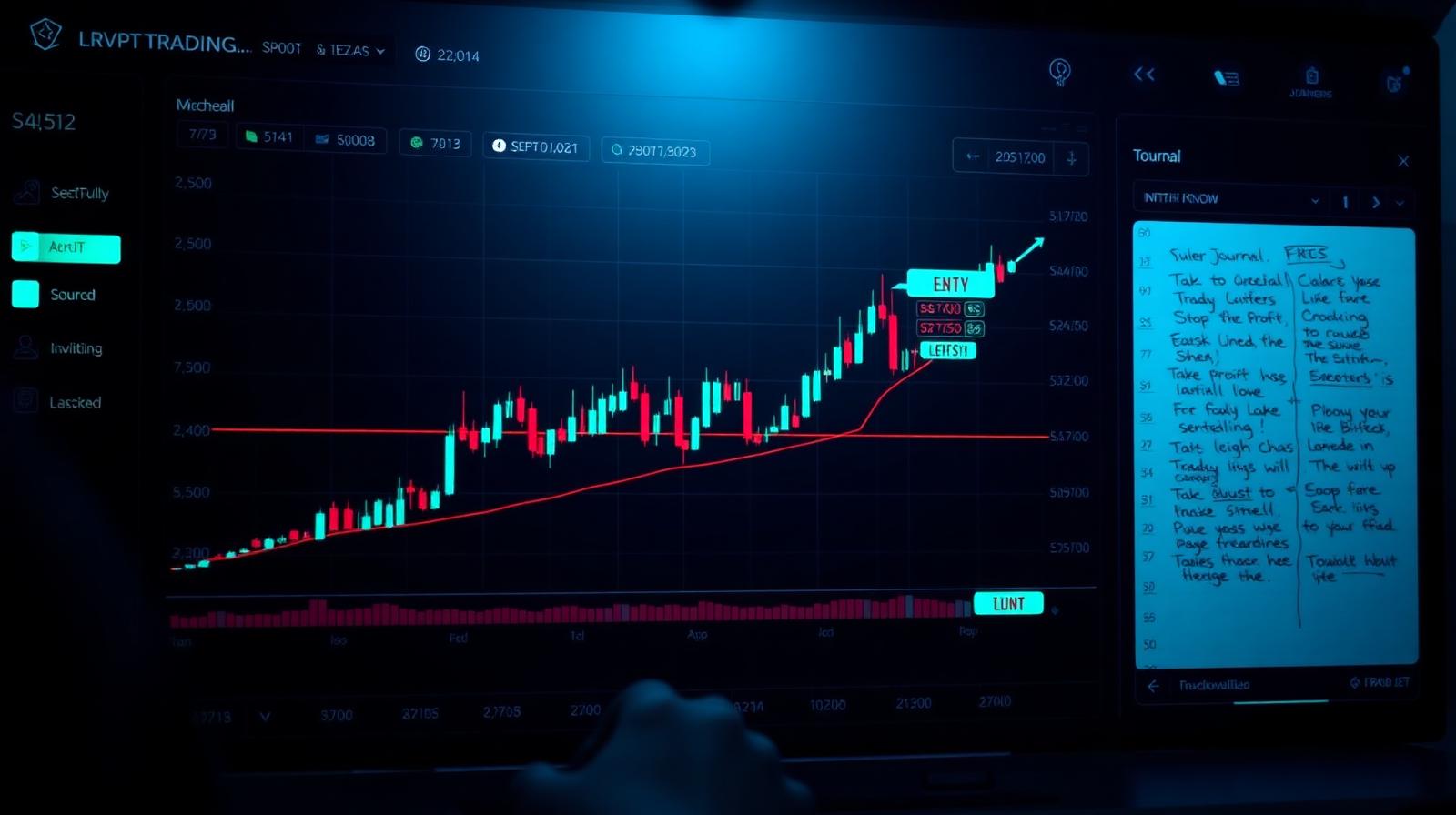
Many traders view crypto signals as simple trade alerts that tell them when to enter and exit the market. While signals can certainly help identify trading opportunities, the most successful traders often use them for something far more valuable: education.
The difference between a trader who blindly follows signals and a trader who learns from them is significant. One remains dependent on external guidance, while the other gradually develops the skills needed to analyse markets independently.
Crypto signal education involves studying the reasoning behind trade setups, understanding market structure, recognising risk management principles and observing how professional analysts approach the market. Over time, this process can help traders improve confidence, discipline and decision-making.
For traders using professional Crypto Signals, every alert can become a practical lesson in market analysis rather than simply another trade opportunity.
Key Takeaways
- Treat every signal as a case study, not a copy-and-paste instruction.
- Analyse market context, entry, stop-loss and targets to understand the full trade thesis.
- A trading journal turns passive signal consumption into active learning.
- The long-term goal is independent analysis — signals are a stepping stone, not the destination.
Why Crypto Signals Can Be Powerful Learning Tools
Traditional trading education often focuses on theory. Traders learn concepts such as support and resistance, trend analysis and risk management but struggle to apply them in live market conditions.
Crypto signals provide real-world examples that bridge the gap between theory and execution.
Each signal contains valuable information such as:
- Entry price
- Stop-loss placement
- Take-profit targets
- Market direction
- Trade rationale
- Risk-to-reward structure
By analysing these elements, traders can see how professional market participants apply trading concepts in real time.
Rather than wondering how experienced traders identify opportunities, signal users can observe actual trade setups as they develop.
This creates an ongoing learning environment where every trade becomes a case study.
Understanding What A Crypto Signal Is Really Showing You
Many beginners focus exclusively on whether a signal wins or loses.
This is often a mistake.
A signal contains far more educational value than the final result.
For example, a professional signal provider may identify:
- A breakout above resistance
- A trend continuation pattern
- A liquidity sweep
- A momentum shift
- A support retest
The educational opportunity comes from understanding why the setup was selected.
If you are unfamiliar with the components of a trading alert, reviewing articles such as What Information Is Included In A Crypto Signal? can help you understand how professional signals are structured.
The goal is to understand the thinking process behind the trade rather than simply copying the entry.
Step 1: Study The Market Context
Before analysing any signal, examine the broader market environment.
Ask questions such as:
- Is Bitcoin trending or ranging?
- Is overall market sentiment bullish or bearish?
- Are major news events affecting volatility?
- Is the setup aligned with higher timeframe direction?
Professional traders rarely analyse trades in isolation.
They consider the wider market structure before making decisions.
By comparing signal alerts with the broader market, traders begin developing contextual awareness, one of the most important trading skills.
Step 2: Analyse The Entry Point
One of the best ways to learn crypto trading signals is by studying why the entry price was selected.
Professional traders typically choose entries based on:
- Support zones
- Resistance levels
- Trendline interactions
- Fibonacci retracements
- Market structure shifts
- Volume confirmation
After receiving a signal, open your chart and identify the reasoning behind the entry.
Ask yourself:
- What technical level is being respected?
- Why did the analyst choose this location?
- Could I have identified this setup independently?
This process gradually improves chart-reading ability.
Mid-Article Insight
- Why is the trade being taken?
- Where is the risk located?
- What conditions support the trade thesis?
Step 3: Learn From Stop-Loss Placement
Many beginner traders focus on entries while ignoring risk management.
Professional traders often focus more on risk than reward.
A stop-loss can reveal:
- Invalid market structure
- Key support levels
- Resistance zones
- Volatility expectations
When studying a signal, examine the stop-loss placement carefully.
Ask:
- Why is the stop positioned here?
- What market condition would invalidate the trade?
- Is the stop based on technical structure or volatility?
Understanding stop placement is one of the fastest ways to improve risk management skills.
This is also why experienced traders often prefer structured Crypto Signals over random trade ideas found online.
Step 4: Examine The Take-Profit Targets
Take-profit levels provide another valuable educational opportunity.
Professional traders typically target:
- Previous highs or lows
- Liquidity zones
- Resistance levels
- Support levels
- Trend continuation objectives
Instead of focusing solely on potential profits, analyse why each target exists.
Notice how professional analysts balance reward potential against risk exposure.
Over time, this helps traders develop a stronger understanding of trade management and position planning.
Contextual Learning Opportunity
Learn more about real-time delivery on our Telegram Signals page.
Step 5: Keep A Crypto Signal Learning Journal
One of the most effective ways to improve through crypto signal education is to maintain a trading journal.
A journal transforms passive signal consumption into active learning.
For every signal, record:
- Entry price
- Stop-loss
- Take-profit targets
- Market conditions
- Trade rationale
- Outcome
- Lessons learned
After reviewing dozens or hundreds of signals, patterns begin to emerge.
You may notice:
- Certain setups perform better in trending markets
- Some strategies struggle during high volatility
- Risk management has a larger impact than win rate
- Market structure often matters more than indicators
This information helps build practical trading experience much faster than relying on memory alone.
Ready To See Real Crypto Signals?
Join our free Telegram community and see how professional traders structure entries, stop losses, take profit targets and risk management in real market conditions.
Step 6: Learn From Winning Trades
Winning trades provide valuable insights into successful market behaviour.
When a signal reaches its targets, review:
- What conditions supported the trade?
- What technical confirmations were present?
- How did price behave before moving?
- What signals indicated strength?
Many traders celebrate winning trades without analysing them.
However, understanding why a trade worked can help identify similar opportunities in the future.
Over time, you may begin recognising recurring patterns that appear across multiple winning setups.
These observations can significantly improve your ability to spot high-quality opportunities independently.
Step 7: Learn From Losing Trades
Losses often provide even greater educational value than wins.
Every professional trader experiences losing trades.
A losing signal does not automatically indicate poor analysis.
Markets are inherently uncertain.
When reviewing losing trades, ask:
- Was the setup invalidated?
- Did market conditions change unexpectedly?
- Was risk managed appropriately?
- Was the original trade thesis reasonable?
This process teaches traders how to think probabilistically rather than emotionally.
The objective is not to avoid all losses but to understand how professional traders manage uncertainty.
Many of the best trading lessons come from analysing trades that did not perform as expected.
Common Mistakes When Learning From Crypto Signals
Blindly Copying Trades
The biggest mistake is treating signals as instructions rather than educational resources.
Blindly following trades limits growth and creates long-term dependency.
Ignoring Risk Management
Many traders focus exclusively on profits while neglecting position sizing and risk control.
Learning why risk management decisions are made is often more valuable than learning entries.
Focusing Only On Results
A winning trade can be poorly executed.
A losing trade can be well analysed.
Focus on process rather than outcome.
Not Reviewing Completed Trades
Many traders never revisit old signals.
Reviewing completed trades often reveals valuable lessons that can improve future performance.
Jumping Between Signal Providers
Consistency is important when learning.
Following multiple conflicting providers often creates confusion and makes it difficult to identify successful analytical frameworks.
How Professional Traders Use Signals
Professional traders often use signals differently from beginners.
Instead of relying entirely on alerts, they use them as:
- Market validation
- Trade confirmation
- Idea generation
- Educational references
- Research tools
Experienced traders frequently compare their own analysis against professional signals.
If both analyses align, confidence may increase.
If they differ, the discrepancy becomes a learning opportunity.
This is one reason why many traders continue using professional Crypto Signals even after developing strong analytical skills.
Signals become part of a broader decision-making process rather than a substitute for analysis.
Building Independent Trading Skills Through Signals
The ultimate goal of learning from crypto signals is independence.
Over time, traders should aim to:
- Understand market structure
- Recognise common setups
- Identify support and resistance
- Manage risk effectively
- Develop trading discipline
- Create personal trading frameworks
Signals can accelerate this development because they provide ongoing examples of professional analysis in live market conditions.
Many traders begin by following signals closely.
As knowledge grows, they start recognising opportunities before alerts arrive.
Eventually, signals become a valuable confirmation tool rather than the sole basis for decision-making.
Educational Benefits Beyond Trade Execution
Crypto signal education extends beyond individual trades.
Consistent study can improve:
- Market awareness
- Trading psychology
- Patience
- Risk management
- Strategic thinking
- Decision-making confidence
These skills often transfer across multiple trading styles and market environments.
Whether a trader ultimately focuses on manual trading, algorithmic systems, Copy Trading or AI Trading solutions, understanding how markets operate remains valuable.
Risk Warning
Conclusion
Learning from crypto signals is about far more than copying entries and exits.
Every signal contains valuable information about market structure, risk management, trade planning and professional analysis.
Traders who actively study signal setups, review outcomes and maintain learning journals often develop stronger analytical skills than those who simply follow alerts without understanding them.
By treating every signal as a lesson rather than just a trade opportunity, traders can gradually improve chart-reading ability, decision-making confidence and overall market understanding.
Professional Crypto Signals can serve as both a trading resource and an educational framework, helping traders progress from beginners into more informed and disciplined market participants.
Frequently Asked Questions
Further Reading
Continue exploring crypto signals and the Parallex ecosystem.
Related Articles
Commercial Pages
Ready To Improve Your Trading?
Join our free Telegram community to access market insights, trading discussions and structured crypto signal examples.