
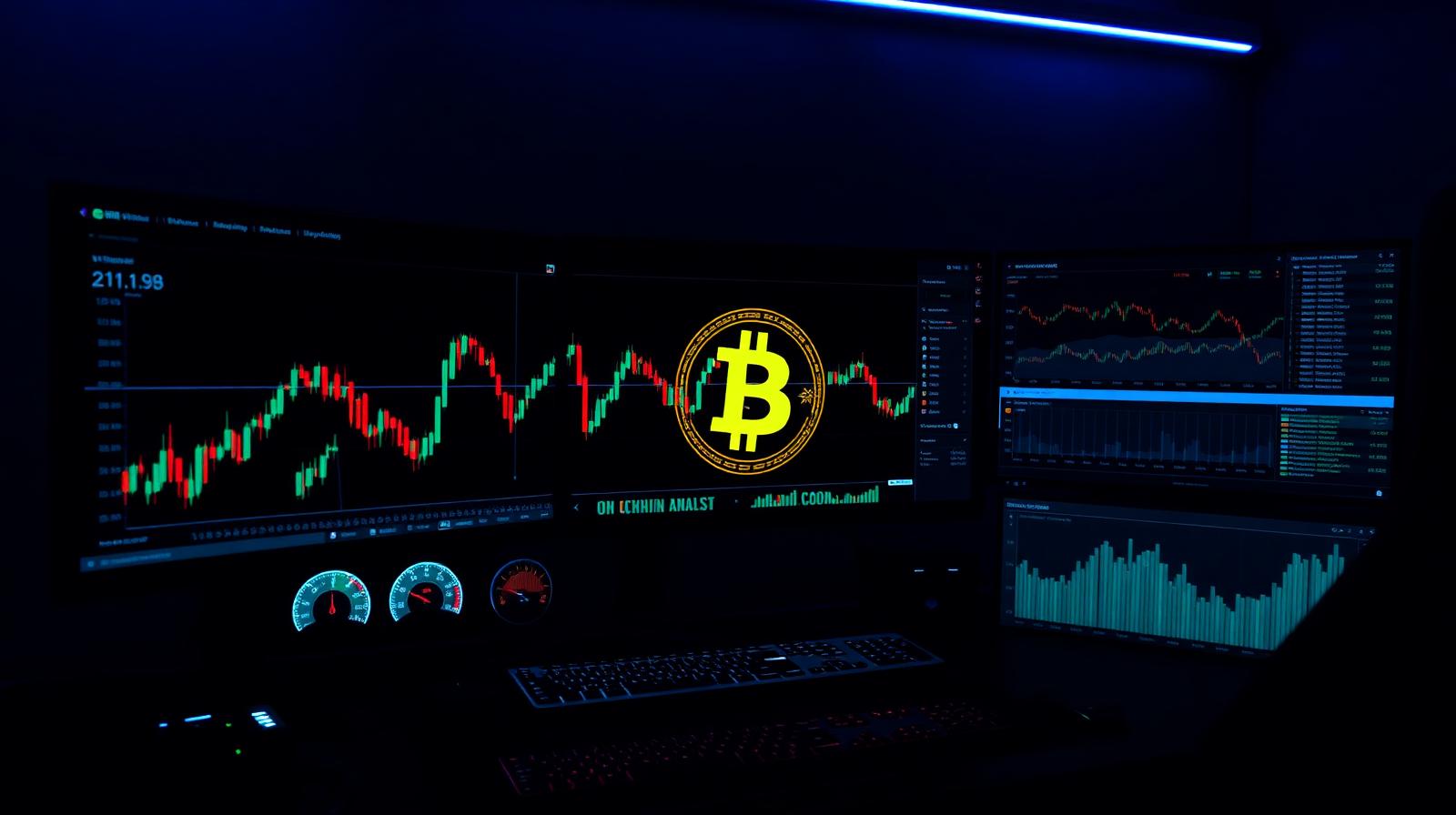
Many traders use crypto signals to identify potential trading opportunities, but few understand the work that happens behind the scenes before a signal is ever sent.
Professional crypto signal providers do far more than simply watch price charts. They combine technical analysis, market structure evaluation, risk management, sentiment monitoring and broader cryptocurrency market research to identify setups that meet predefined trading criteria.
Understanding how crypto signal providers work can help traders make better decisions, evaluate signal quality and develop greater confidence in the signals they follow.
In this guide, we'll examine how professional crypto signal providers analyse markets, how trading signals are generated and the methods used to identify potential opportunities in rapidly changing crypto markets.
Key Takeaways
- Professional signals combine technical, fundamental, sentiment and on-chain analysis.
- Market structure and multi-timeframe analysis underpin most quality setups.
- Risk management — stop placement, position sizing, portfolio exposure — matters more than win rate.
- AI assists analysts but human judgement remains essential for context and adaptability.
Why Market Analysis Matters
Cryptocurrency markets operate 24 hours a day, seven days a week. Prices can move dramatically within minutes due to news events, macroeconomic developments, liquidations or shifts in market sentiment.
Without a structured analysis process, traders often make emotional decisions based on fear, excitement or social media hype.
Professional crypto signal providers attempt to remove emotion from the process by following a systematic approach to market analysis.
Their objective is not to predict every market movement perfectly. Instead, they seek to identify situations where probability appears to favour a particular outcome while managing risk appropriately.
This structured approach forms the foundation of high-quality crypto signals.
The Core Components of Crypto Signal Analysis
Most professional crypto signal providers combine several analytical methods rather than relying on a single indicator or strategy.
These methods typically include:
- Technical analysis
- Fundamental analysis
- Market sentiment analysis
- Volume analysis
- Risk assessment
- Market structure evaluation
- Trade management planning
Together, these components help create a more complete view of market conditions.
Technical Analysis For Crypto Signals
Technical analysis is one of the most important tools used in crypto market analysis.
Technical analysis focuses on studying price action, chart patterns and historical market behaviour to identify potential future movements.
Professional signal providers often begin their analysis by examining:
Support And Resistance Levels
Support and resistance represent areas where price has historically reacted.
Support zones may indicate areas where buying pressure has previously emerged.
Resistance zones may highlight areas where sellers have historically entered the market.
When price approaches these levels, signal providers assess whether conditions support a continuation or reversal.
Trend Analysis
Trend identification plays a major role in how trading signals are generated.
Analysts often ask:
- Is the market trending upward?
- Is the market trending downward?
- Is the market consolidating?
Trading with the dominant trend generally increases the probability of success compared to constantly trading against market momentum.
Chart Patterns
Professional crypto signal providers frequently monitor chart formations such as:
- Triangles
- Flags
- Pennants
- Channels
- Double tops
- Double bottoms
- Head and shoulders patterns
These formations can provide clues about potential future market behaviour.
Technical Indicators
Indicators are rarely used in isolation but can provide additional confirmation.
Common tools include:
- Relative Strength Index (RSI)
- Moving Averages
- MACD
- Bollinger Bands
- Volume indicators
- Average True Range (ATR)
The goal is not to blindly follow indicators but to use them as supporting evidence within a broader analytical framework.
How Traders Analyse Crypto Markets Using Market Structure
Market structure refers to the overall organisation of price movement.
Professional traders pay close attention to:
- Higher highs
- Higher lows
- Lower highs
- Lower lows
- Breakouts
- Trend shifts
Understanding market structure helps signal providers determine whether bullish or bearish conditions are developing.
For example, a market that consistently produces higher highs and higher lows may indicate an uptrend.
A breakdown in this pattern could suggest weakening momentum and a possible shift in market direction.
This is a critical component of how crypto experts analyse markets.
Volume Analysis And Order Flow
Price movements become significantly more meaningful when supported by volume.
Volume helps analysts understand the conviction behind a move.
For example:
- Rising prices with increasing volume may indicate strong buying participation.
- Rising prices with declining volume may suggest weakening momentum.
- Large volume spikes can signal institutional participation or major market events.
Professional crypto signal analysis often includes monitoring volume behaviour to validate potential trade setups.
Many providers also analyse liquidity zones where significant buying or selling activity may occur.
Fundamental Analysis In Crypto Trading
While technical analysis focuses on charts, fundamental analysis examines the underlying factors that may influence an asset's value.
Professional crypto signal providers regularly monitor:
Project Developments
Major developments may affect market sentiment, including:
- Network upgrades
- Token launches
- Strategic partnerships
- Ecosystem growth
- Development activity
Economic Events
Broader economic factors can influence cryptocurrency markets.
Examples include:
- Interest rate decisions
- Inflation data
- Employment reports
- Regulatory announcements
- Global financial developments
These events often impact Bitcoin first before affecting the wider crypto market.
Regulatory News
Regulatory announcements can trigger significant market volatility.
Professional providers monitor developments from major jurisdictions to understand potential market implications before entering positions.
How Trading Signals Are Generated
After gathering information from multiple sources, signal providers begin evaluating potential setups.
A typical process may include:
- Identifying market direction.
- Locating key support and resistance levels.
- Assessing technical confirmations.
- Evaluating risk-to-reward ratios.
- Determining entry levels.
- Setting stop-loss placement.
- Establishing profit targets.
- Reviewing broader market conditions.
Only when these factors align will many professional providers consider issuing a signal.
This process helps separate professional crypto signal providers from individuals who rely solely on guesswork or emotion.
Understanding Risk-To-Reward Ratios
One of the most important aspects of signal generation is risk management.
Professional traders evaluate whether a trade offers sufficient potential reward relative to the risk involved.
For example:
- Risking $100 to potentially make $300 creates a 1:3 risk-to-reward ratio.
- Risking $100 to potentially make $100 creates a 1:1 ratio.
Many experienced traders prioritise setups that offer favourable risk-to-reward characteristics before entering a trade.
Contextual Insight
Ready To See Real Crypto Signals?
Join our free Telegram community and see how professional traders structure entries, stop losses, take profit targets and risk management in real market conditions.
Market Sentiment And Cryptocurrency Market Research
Technical analysis alone rarely provides the complete picture.
Professional crypto signal providers also monitor market sentiment to understand how traders, investors and institutions are positioning themselves.
Market sentiment can influence price movements long before technical indicators react.
Sources Of Market Sentiment
Common sources include:
- Social media activity
- News publications
- On-chain analytics
- Funding rates
- Open interest data
- Fear and Greed Index readings
- Institutional investment trends
By combining sentiment analysis with technical signals, providers gain additional context when evaluating opportunities.
For example, a bullish chart pattern supported by improving market sentiment may offer stronger conviction than a chart pattern alone.
On-Chain Analysis And Blockchain Data
Modern crypto market analysis increasingly incorporates on-chain metrics.
Unlike traditional financial markets, blockchain networks provide publicly accessible transaction data.
Professional analysts may examine:
- Wallet activity
- Exchange inflows and outflows
- Stablecoin movements
- Miner behaviour
- Large holder activity
- Network usage metrics
These indicators can reveal underlying trends that are not immediately visible through price charts alone.
For example, significant Bitcoin withdrawals from exchanges may indicate long-term accumulation, while large exchange deposits could signal potential selling pressure.
Risk Management: The Foundation Of Professional Signal Services
One of the biggest misconceptions among new traders is that successful trading revolves solely around finding winning trades.
In reality, risk management often plays a larger role in long-term success than trade selection itself.
Professional crypto signal providers place significant emphasis on controlling downside risk.
Stop Loss Placement
Every trade should have a predefined point where the position will be exited if the market moves against expectations.
This level is known as the stop loss.
Effective stop-loss placement considers:
- Market structure
- Volatility
- Support and resistance levels
- Position size
Poor stop-loss placement can result in unnecessary losses even when the overall market direction is eventually correct.
Position Sizing
Position sizing determines how much capital is allocated to each trade.
Professional traders typically avoid risking a large percentage of their account on any single position.
By limiting exposure, they protect themselves from inevitable losing trades and preserve capital for future opportunities.
Portfolio Exposure
Signal providers also assess how individual trades interact within a broader portfolio.
Multiple positions that rely on the same market conditions may increase overall risk.
Professional crypto signal analysis therefore considers both trade-level and portfolio-level exposure.
Common Tools Used By Professional Crypto Signal Providers
Professional analysts rely on a range of tools to support their decision-making process.
Examples include:
Charting Platforms
Advanced charting software helps traders analyse:
- Price action
- Technical indicators
- Drawing tools
- Multi-timeframe analysis
Market Data Platforms
These platforms provide:
- Volume metrics
- Market capitalisation data
- Exchange statistics
- Liquidity information
News Aggregators
Staying informed about breaking developments is essential in cryptocurrency markets.
Signal providers often monitor multiple news sources simultaneously to identify potentially market-moving events.
On-Chain Analytics Platforms
These tools provide blockchain-specific insights unavailable in traditional markets.
Combining multiple data sources creates a more comprehensive picture of market conditions.
Multi-Timeframe Analysis
One technique widely used by professional crypto signal providers is multi-timeframe analysis.
Rather than analysing a single chart timeframe, analysts compare several.
For example:
- Weekly charts identify long-term trends.
- Daily charts provide strategic direction.
- Four-hour charts refine trade opportunities.
- One-hour charts assist with execution timing.
This layered approach helps traders avoid making decisions based solely on short-term market noise.
What Makes A High-Quality Crypto Signal?
Not all signals are created equally.
A high-quality signal is typically supported by:
- Multiple forms of analysis
- Clear entry criteria
- Defined stop-loss levels
- Realistic profit targets
- Sound risk management
- Market context
- Transparent reasoning
Signals lacking these components may rely more heavily on speculation than structured analysis.
Traders seeking to better understand signal quality may also benefit from reading What Makes A High Quality Crypto Signal? and What Information Is Included In A Crypto Signal? to understand the elements that separate professional services from low-quality alternatives.
Common Mistakes Traders Make When Evaluating Signals
Understanding how crypto signal providers work can also help traders avoid common mistakes.
Focusing Only On Win Rate
Many beginners judge a signal provider solely by win rate.
However, win rate alone provides an incomplete picture.
A provider with a lower win rate but strong risk management may outperform a provider with a higher win rate and poor risk controls.
Ignoring Risk Management
Even excellent signals can fail.
Markets remain unpredictable.
Traders who ignore stop-loss recommendations or overleverage positions expose themselves to unnecessary risk.
Chasing Every Alert
Successful trading often involves patience and selectivity.
Following every signal without understanding market conditions can lead to inconsistent results.
Expecting Guaranteed Outcomes
No professional crypto signal provider can guarantee profits.
Legitimate providers focus on probabilities, risk management and disciplined execution rather than promises.
How AI Is Changing Market Analysis
Technology continues to influence how crypto experts analyse markets.
Artificial intelligence is increasingly being used to process:
- Large datasets
- Historical price behaviour
- Sentiment indicators
- Market correlations
- Pattern recognition
AI tools can assist analysts by identifying opportunities more efficiently.
However, human oversight remains essential.
Markets are influenced by human behaviour, regulatory developments and unexpected events that cannot always be captured by algorithms alone.
As technology evolves, many traders are exploring AI Trading solutions alongside traditional signal-based approaches to enhance decision-making.
The Human Element Behind Professional Signals
Despite advances in automation, successful signal generation still relies heavily on human judgement.
Experienced analysts bring:
- Market experience
- Risk awareness
- Contextual understanding
- Strategic thinking
- Adaptability
Professional crypto signal providers combine data-driven analysis with practical trading expertise.
This balance helps create signals that reflect both quantitative information and real-world market dynamics.
Learning From Professional Market Analysis
Following signals should not simply be about copying trades.
Many traders use signals as an educational tool.
By reviewing:
- Entry rationale
- Stop-loss placement
- Profit targets
- Market conditions
Traders can gradually improve their own analytical skills.
This is why many experienced market participants encourage traders to study how signals are created rather than focusing exclusively on trade outcomes.
For additional educational insights, readers may find How To Learn From Crypto Signals particularly useful as a next step in developing trading knowledge.
Risk Warning
Conclusion
Understanding how signal providers analyse markets reveals that professional trading signals are typically built on far more than simple chart observations.
Professional crypto signal providers combine technical analysis, fundamental analysis in crypto trading, market sentiment, on-chain research, risk management and strategic trade planning to identify potential opportunities. Their objective is not to predict every market move perfectly, but to consistently identify favourable risk-to-reward scenarios.
For traders, understanding how trading signals are generated can provide valuable insight into signal quality and improve confidence when evaluating different services.
The best providers focus on disciplined processes, transparency and risk management rather than promises of guaranteed profits.
As cryptocurrency markets continue to evolve, traders who understand the principles behind crypto signal analysis will be better positioned to evaluate opportunities and make informed decisions.
Frequently Asked Questions
Further Reading
Continue exploring crypto signals and the Parallex ecosystem.
Related Articles
Commercial Pages
Ready To Improve Your Trading?
Join our free Telegram community to access market insights, trading discussions and structured crypto signal examples.