
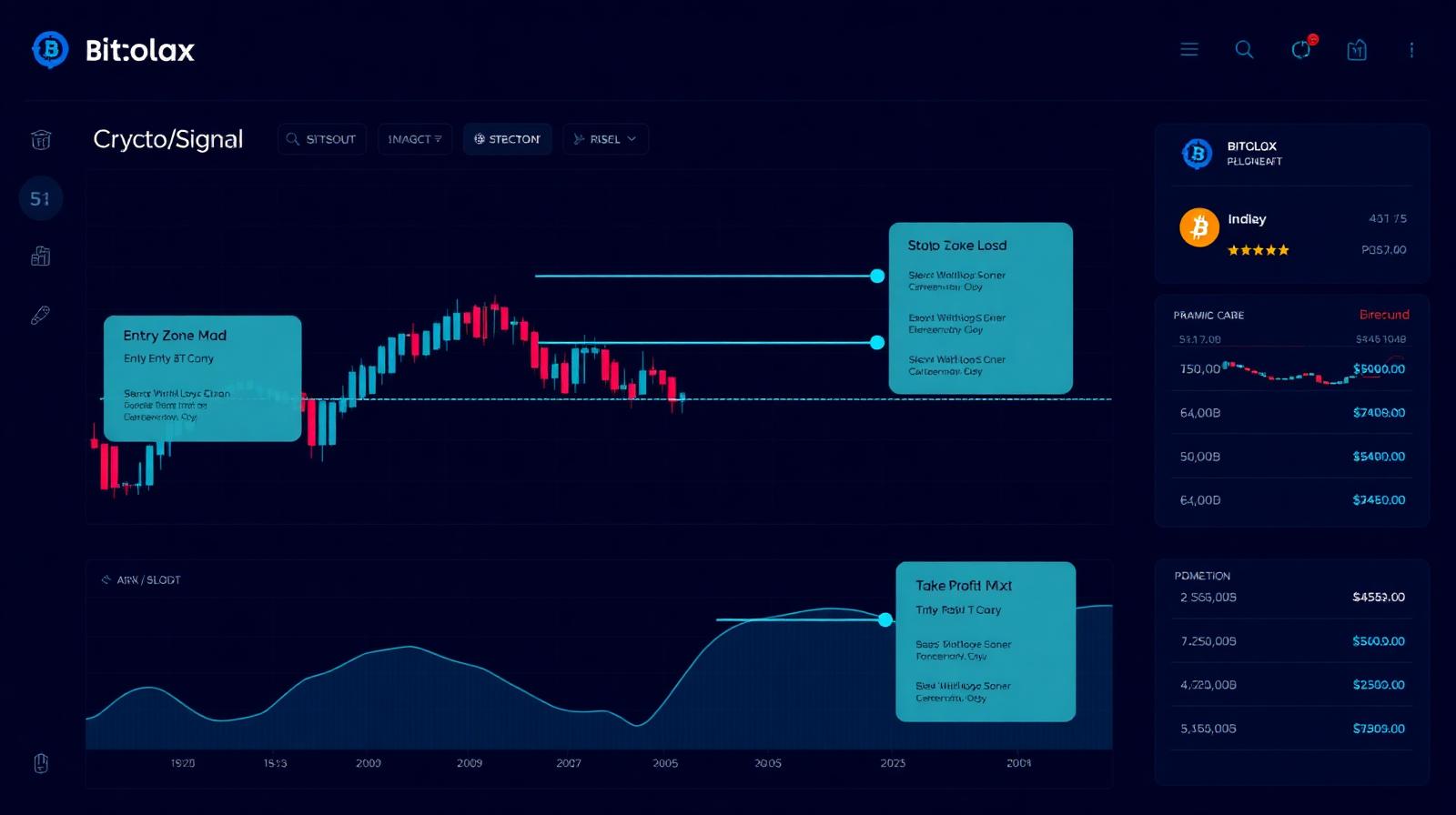
Crypto trading signals are designed to simplify decision-making by providing traders with a structured trade setup. Whether you receive signals from a professional analyst, a trading community, an algorithmic system or a premium signal provider, every signal contains specific information that helps traders identify opportunities and manage risk.
For many beginners, receiving a signal can feel overwhelming. Numbers, percentages, entry zones and target prices may seem confusing at first glance. Understanding what each component means is essential if you want to use crypto trading signals effectively rather than blindly following instructions.
In this guide, we'll break down the key information found inside a crypto signal, explain why each element matters and show how traders use these details to build a disciplined approach to the market.
Key Takeaways
- A complete signal contains far more than just a buy or sell instruction.
- Entry zones, stop losses and take profit targets define risk and reward.
- Risk ratings and trade rationale separate premium signals from basic alerts.
- Reading a signal as a complete plan leads to better trading discipline.
Why Understanding Crypto Signal Information Matters
Many traders make the mistake of focusing only on whether a signal is a buy or sell recommendation. In reality, the information surrounding the trade is often more important than the direction itself.
A quality signal should provide:
- A clear trading opportunity
- Defined risk parameters
- Profit objectives
- Market context
- Trade management guidance
Understanding crypto trading signals allows traders to make informed decisions rather than treating signals as random predictions.
Professional traders view signals as structured trade plans rather than guaranteed outcomes.
If you're new to signals, it may also help to understand the language used by providers. Our guide on Common Crypto Signal Terminology explains many of the phrases and abbreviations commonly found inside signal alerts.
The Core Components Of A Crypto Signal
Although formats vary between providers, most cryptocurrency trading signals contain several key pieces of information.
These crypto signal components work together to create a complete trade setup.
Typical crypto signal details include:
- Asset or trading pair
- Trade direction
- Entry price or entry zone
- Stop loss level
- Take profit targets
- Risk management guidance
- Trade rationale
- Timeframe
Let's examine each component individually.
Trading Pair Or Asset
The first piece of crypto signal information identifies the market being traded.
Examples include:
- BTC/USDT
- ETH/USDT
- SOL/USDT
- XRP/USDT
The trading pair tells you exactly which asset the signal applies to.
For example:
BUY BTC/USDT
This indicates the trade relates specifically to Bitcoin against Tether.
Without this information, a signal would be impossible to execute accurately.
Professional crypto trading signals always clearly identify the asset involved.
Trade Direction
Every signal specifies whether traders should buy or sell.
Common examples include:
Buy Signal
A buy signal suggests the analyst expects price appreciation.
Example: BUY ETH/USDT
Sell Signal
A sell signal suggests the analyst expects price weakness.
Example: SELL BTC/USDT
Long Position
A long trade aims to profit from rising prices.
Short Position
A short trade aims to profit from falling prices.
Understanding trade direction is fundamental when learning how to read crypto signals.
Entry Price Or Entry Zone
One of the most important crypto signal components is the entry price.
This tells traders where the position should be opened.
Some signals provide a single entry point:
- Entry: $62,000
Others provide an entry zone:
- Entry Zone: $61,500–$62,200
The entry zone gives traders flexibility and can improve execution quality.
Professional analysts often use entry ranges because markets rarely move with perfect precision.
For traders wanting a deeper understanding of execution strategies, our article Understanding Entry Points In Crypto Trading explains how entries are selected and why timing matters.
Why Entry Zones Are Often Better Than Fixed Prices
Markets move quickly.
If a signal provider issues an alert at a specific price, many members may receive it at slightly different times.
An entry zone allows:
- Better trade flexibility
- Reduced slippage
- Improved order execution
- More realistic trade management
For this reason, many premium crypto signal providers prefer entry ranges over exact prices.
Stop Loss Information
A stop loss is one of the most important risk management tools included in any crypto signal setup.
The stop loss determines where the trade will automatically close if the market moves against the position.
Example:
- Entry: $60,000
- Stop Loss: $58,500
In this scenario, the trader risks approximately $1,500 per Bitcoin.
The stop loss crypto signal component protects trading capital and prevents losses from escalating beyond acceptable levels.
Professional traders never ignore stop losses.
They are a fundamental part of long-term survival in financial markets.
Why Stop Losses Matter
Without a stop loss:
- Losses can become unlimited
- Emotional decision-making increases
- Risk becomes difficult to control
- Account drawdowns can accelerate
Every professional crypto signal analysis should include a clearly defined stop loss.
For a deeper explanation of how protective exits work, see Understanding Stop Losses In Crypto Signals.
Take Profit Targets
The next major component is the take profit section.
Take profit levels define where traders may close positions for gains.
Many signals provide multiple targets.
Example:
- Take Profit 1: $63,000
- Take Profit 2: $65,000
- Take Profit 3: $68,000
Multiple targets allow traders to scale out of positions gradually.
This is one of the most common features found in high-quality crypto trading signals.
Benefits include:
- Locking in profits progressively
- Reducing emotional pressure
- Improving overall risk management
- Allowing traders to capture larger trends
Why Multiple Targets Are Common
Markets rarely move in straight lines.
By providing multiple take profit targets, signal providers allow traders to:
- Secure partial profits
- Leave remaining positions open
- Reduce exposure as trades develop
- Adapt to changing market conditions
This approach is particularly common among professional Crypto Signals services that focus on disciplined trade management.
Example Of A Complete Crypto Signal
To understand how all crypto signal components fit together, consider the following example:
BUY SOL/USDT
- Entry Zone: $145–$148
- Stop Loss: $139
- Take Profit 1: $155
- Take Profit 2: $162
- Take Profit 3: $170
- Risk Level: Medium
- Trade Thesis: Bullish breakout from resistance with increasing volume.
This crypto signal format provides everything required to execute and manage the trade.
The trader knows:
- What to buy
- When to enter
- Where risk is defined
- Where profits may be taken
- Why the trade exists
This structure transforms a simple trade alert into a complete trading plan.
Ready To See Real Crypto Signals?
Join our free Telegram community and see how professional traders structure entries, stop losses, take profit targets and risk management in real market conditions.
Risk Level And Position Sizing Information
Many premium crypto signal providers include a risk rating alongside the trade setup.
Examples include:
- Low Risk
- Medium Risk
- High Risk
Some providers may also assign a numerical score.
Risk ratings help traders understand the expected volatility and uncertainty surrounding the trade.
For example:
- Low Risk: Typically involves stronger technical confirmation, established trends or major cryptocurrencies.
- Medium Risk: May involve moderate volatility and slightly less confirmation.
- High Risk: Often includes smaller-cap cryptocurrencies, breakout trades or highly volatile market conditions.
Risk ratings should never replace proper position sizing.
Even the highest-quality cryptocurrency trading signals can fail because markets are inherently unpredictable.
Professional traders adjust position sizes based on risk rather than confidence.
Trade Rationale And Market Analysis
One feature that often separates premium services from basic crypto trade alerts is the inclusion of trade rationale.
Trade rationale explains why the analyst believes the setup exists.
Examples may include:
- Breakout from resistance
- Support level bounce
- Trend continuation
- Bullish chart pattern
- Volume confirmation
- Momentum divergence
- Fundamental catalyst
Understanding the reasoning behind a trade helps traders improve their own market knowledge.
It also provides transparency.
A signal without any explanation may be harder to evaluate than one supported by a clear analysis.
If you're assessing providers, understanding what makes a reliable setup can help. Our article What Makes A High Quality Crypto Signal? explores the characteristics often found in professional signal services.
Timeframe Information
Another important element often included in crypto signal details is timeframe.
Signals may be designed for:
- Scalping
- Day trading
- Swing trading
- Position trading
Examples:
- Scalp Trade: Minutes to hours.
- Day Trade: Hours to one day.
- Swing Trade: Several days to several weeks.
- Position Trade: Weeks to months.
Timeframe helps traders understand expectations and manage trades appropriately.
A common mistake among beginners is expecting immediate results from a swing-trading signal designed to play out over several days.
How To Read Crypto Signals Correctly
Many traders focus only on the entry and profit targets.
A better approach is to read the signal as a complete trading plan.
When evaluating a signal, ask:
- What asset is being traded?
- Is the direction long or short?
- Where is the entry zone?
- Where is the stop loss?
- What are the take profit targets?
- What is the risk level?
- What is the rationale?
- What timeframe is expected?
By answering these questions, traders gain a complete understanding of the trade before committing capital.
This process is a key part of understanding crypto trading signals properly.
Common Mistakes Traders Make With Crypto Signals
Even well-structured signals can lead to poor results if they are used incorrectly.
Entering Too Late
Many traders chase price after the market has already moved beyond the recommended entry zone.
This can dramatically alter the risk-reward ratio.
Ignoring The Stop Loss
One of the most damaging mistakes is removing or widening stop losses.
Doing so increases risk beyond the parameters intended by the signal provider.
Taking Profits Too Early
Fear often causes traders to exit profitable trades prematurely.
Following the planned take profit structure can help maintain discipline.
Overleveraging
A signal is not a guarantee.
Using excessive leverage can magnify losses and create unnecessary risk.
Blindly Following Signals
Signals should be viewed as educational trade plans rather than instructions that eliminate personal responsibility.
Successful traders understand the setup before entering.
Crypto Signals Vs Telegram Signals
Many traders first encounter signals through Telegram communities.
While Telegram Signals can provide convenient delivery, the quality of information remains the most important factor.
A professional signal delivered through Telegram should still include:
- Asset information
- Entry zone
- Stop loss
- Take profit targets
- Risk guidance
- Market rationale
The delivery method is less important than the completeness and clarity of the signal itself.
Crypto Signals Vs Copy Trading
Some traders prefer Copy Trading rather than manually executing signals.
With Copy Trading, positions are automatically mirrored from another trader's account.
Signals and copy trading serve different purposes:
Crypto Signals:
- Manual execution
- Greater control
- Educational value
- Improved market understanding
Copy Trading:
- Automated execution
- Less manual involvement
- Simplified participation
- Reliance on trader performance
The best choice depends on individual goals, experience levels and desired involvement in the trading process.
What Does A Professional Crypto Signal Look Like?
A professional crypto signal setup generally contains:
Professional Signal Example
- Asset: BTC/USDT
- Direction: Long
- Entry Zone: $105,000–$106,000
- Stop Loss: $102,500
- Take Profit Targets: $108,000 / $110,000 / $114,000
- Risk Level: Medium
- Trade Thesis: Bullish continuation following support retest and volume expansion.
- Expected Duration: 3–7 Days
This format gives traders all necessary information to make informed decisions.
The best providers focus on clarity, transparency and risk management rather than simply issuing buy and sell alerts.
Why Signal Structure Matters
The structure of a signal directly impacts its usefulness.
A vague signal such as:
"Buy Bitcoin now"
provides almost no practical guidance.
By contrast, a structured signal includes:
- Clear execution criteria
- Defined risk
- Profit objectives
- Context
- Management rules
This transforms speculation into a disciplined trading framework.
For this reason, experienced traders often place greater importance on signal quality than signal frequency.
Risk Warning
Conclusion
Understanding what information is included in a crypto signal is essential for anyone using crypto trading signals as part of their trading strategy.
A well-constructed signal is far more than a simple buy or sell recommendation.
Professional crypto signal components typically include:
- Asset selection
- Trade direction
- Entry zones
- Stop losses
- Take profit targets
- Risk ratings
- Trade rationale
- Timeframe expectations
Together, these elements create a complete trading plan that helps traders make informed decisions and manage risk effectively.
Whether you are evaluating cryptocurrency trading signals for the first time or comparing providers, understanding how each component works can help you identify higher-quality opportunities and avoid common mistakes.
Frequently Asked Questions
Further Reading
Continue exploring crypto signals and the Parallex ecosystem.
Related Articles
Commercial Pages
Ready To Improve Your Trading?
Join our free Telegram community to access market insights, trading discussions and structured crypto signal examples.