
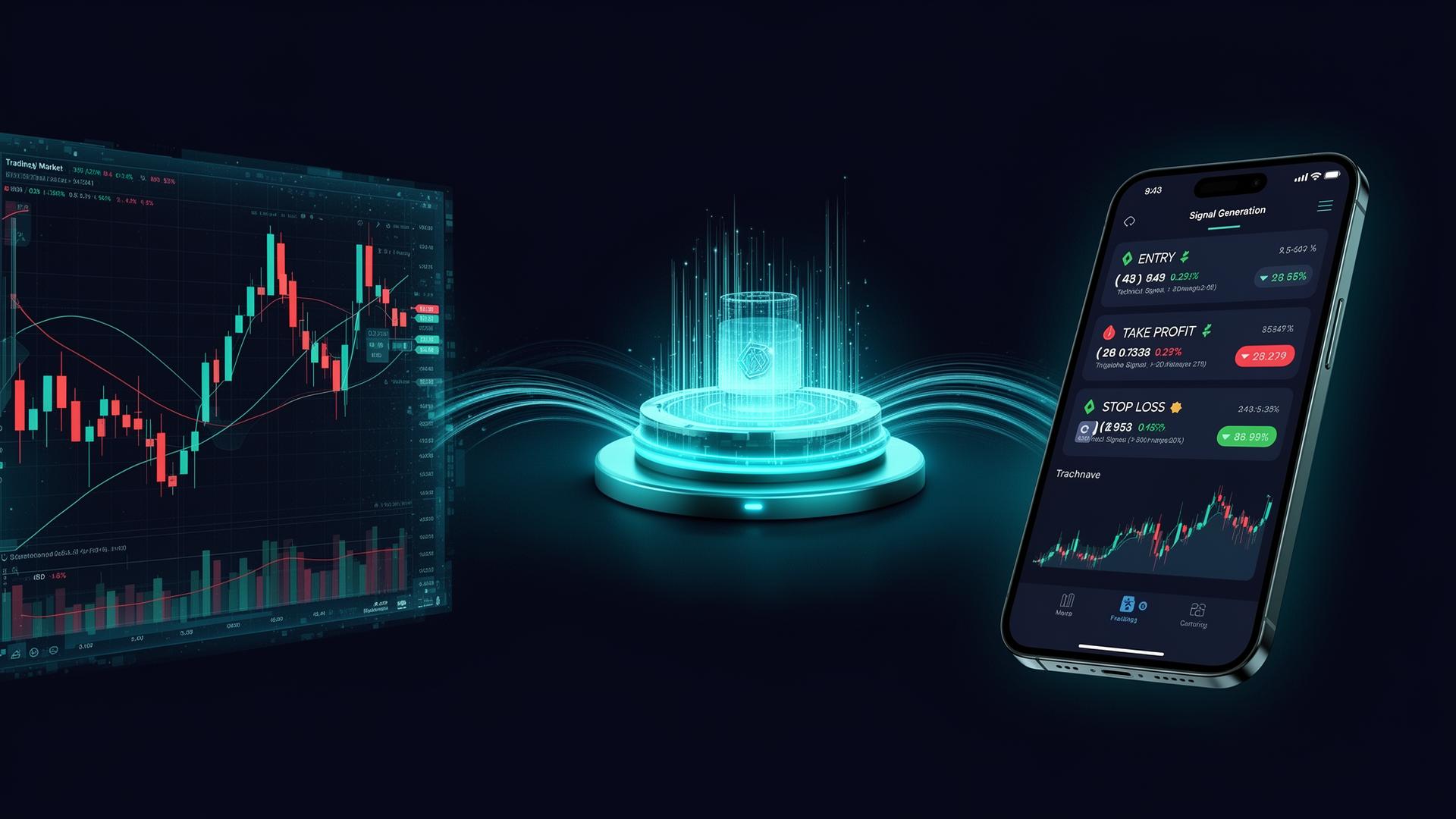
Crypto trading signals have become one of the most widely used tools in cryptocurrency trading. Whether you are a complete beginner or an experienced trader looking to improve efficiency, signals can provide valuable market insights and structured trade ideas.
However, many traders understand what a signal is without fully understanding how crypto signals work behind the scenes. They receive an alert, place a trade, and hope for the best. This approach often leads to confusion, unrealistic expectations, and poor risk management.
Understanding how crypto trading signals are generated, analysed, and delivered can help traders use them more effectively. It also makes it easier to identify high-quality providers and avoid unreliable services that rely on hype rather than genuine market analysis.
In this guide, we will break down exactly how crypto signals work, what information they contain, how professional analysts create them, and how traders can use them as part of a disciplined trading strategy.
Key Takeaways
- Signals combine technical, structural, fundamental and sentiment analysis to identify opportunities.
- A complete signal includes pair, entry zone, take-profit targets, stop-loss and bias.
- Risk management and execution matter as much as the signal itself.
- AI systems can accelerate scanning but do not guarantee profitable trades.
What Are Crypto Trading Signals?
Crypto trading signals are trade recommendations based on market analysis. A signal is designed to identify a potential trading opportunity and provide traders with the information needed to enter and manage a position.
Most cryptocurrency signals contain:
- The trading pair
- Entry price or entry zone
- Take profit targets
- Stop loss level
- Trade direction (long or short)
- Risk considerations
For example, a signal may suggest buying Bitcoin at a specific price range with predefined profit targets and a stop-loss level to manage downside risk.
If you are completely new to the concept, our article on What Are Crypto Signals? provides a detailed introduction before exploring the mechanics behind how they work.
Signals can be delivered through various channels, including Telegram groups, mobile notifications, email alerts, proprietary trading platforms, and dedicated signal dashboards.
Why Crypto Signals Exist
The cryptocurrency market operates 24 hours a day, seven days a week. Unlike traditional financial markets, opportunities can appear at any time. Monitoring charts continuously is unrealistic for most traders.
Crypto signals help bridge this gap by:
- Identifying potential opportunities
- Monitoring multiple assets simultaneously
- Highlighting key technical levels
- Saving research time
- Supporting decision-making
Many traders use professional Crypto Signals services because analysing dozens or hundreds of cryptocurrencies manually can be time-consuming and technically demanding.
Signals are not designed to replace trader education. Instead, they provide structured insights that traders can use alongside their own research and risk management processes.
How Crypto Trading Signals Are Generated
Professional crypto signal providers typically combine several forms of analysis before issuing a trade alert.
Technical Analysis
Technical analysis is the foundation of most cryptocurrency signals. Analysts study price action, market structure, chart patterns, support levels, resistance zones, and momentum indicators to identify potential trading opportunities.
Common tools include:
- Relative Strength Index (RSI)
- Moving Averages
- MACD
- Volume analysis
- Trend lines
- Fibonacci retracements
- Support and resistance zones
When multiple indicators align, analysts may identify a high-probability trading setup worthy of issuing as a signal.
Market Structure Analysis
Professional analysts focus heavily on market structure. Rather than relying solely on indicators, they assess:
- Higher highs and higher lows
- Lower highs and lower lows
- Trend continuation patterns
- Breakouts
- Consolidation ranges
Understanding market structure helps determine whether conditions favour long positions, short positions, or staying out of the market altogether.
Fundamental Analysis
Some crypto signal providers also incorporate fundamental analysis. Factors may include:
- Project developments
- Major partnerships
- Token launches
- Exchange listings
- Regulatory announcements
- Macro-economic events
For example, a major exchange listing announcement may significantly impact demand for a cryptocurrency and create trading opportunities.
Sentiment Analysis
Market sentiment can influence short-term price movements.
Professional analysts monitor:
- Social media trends
- Community activity
- News developments
- Institutional interest
- On-chain metrics
AI and Algorithmic Systems
Modern signal providers increasingly utilise AI Trading systems and automated analysis models. These systems can scan thousands of market conditions simultaneously and identify opportunities based on predefined criteria.
AI does not guarantee profitable trades, but it can improve efficiency and help analysts process large amounts of market data quickly.
What Information Is Included In A Crypto Signal?
A professional signal should provide enough information for traders to understand both the opportunity and the associated risk.
Trading Pair
The cryptocurrency being traded. Examples: BTC/USDT, ETH/USDT, SOL/USDT.
Entry Zone
The price area where the trade should be entered. Rather than a single price, many providers use entry ranges to accommodate market fluctuations.
Take Profit Targets
Take-profit levels define where traders may consider securing profits. Many signals include multiple targets to allow for partial profit-taking as the trade develops.
Stop Loss Level
The stop-loss level helps limit potential losses if the market moves against the trade. Risk management is one of the most important components of any crypto signal.
Trade Bias
Signals typically specify whether the trade is long (expecting price increases) or short (expecting price decreases). This provides clarity regarding the intended market direction.
Example Of A Crypto Trading Signal
Consider a hypothetical Bitcoin trade setup:
Example Signal
- Asset
- BTC/USDT
- Entry Zone
- $95,000 – $96,000
- Direction
- Long
- Take Profit 1
- $98,000
- Take Profit 2
- $100,000
- Take Profit 3
- $103,000
- Stop Loss
- $93,500
A trader receiving this signal would understand where to enter, where profits may be taken, where risk is controlled, and the intended trade direction. This structured approach removes much of the guesswork often associated with trading.
How Traders Use Crypto Signals
Successful traders do not blindly follow every signal.
Instead, they typically:
- Review the trade setup
- Confirm market conditions
- Evaluate risk exposure
- Adjust position sizing
- Monitor execution
Some traders combine signals with their own analysis while others use signals as educational tools to improve market understanding. Many traders also receive Telegram Signals because of the speed and convenience of real-time delivery.
Common Mistakes When Using Crypto Signals
Even high-quality signals can produce poor outcomes when used incorrectly.
Ignoring Risk Management
No signal provider can predict markets with complete accuracy. Every trade should include sensible position sizing and stop-loss discipline.
Overleveraging
Leverage amplifies both profits and losses. Many traders lose capital by using excessive leverage regardless of signal quality.
Chasing Entries
Entering significantly above the recommended entry range can dramatically alter the risk-reward profile. Patience is often essential.
Blindly Following Every Alert
Signals should be viewed as informed opportunities rather than guaranteed outcomes. Understanding the reasoning behind trades can improve long-term results.
How Signal Providers Measure Accuracy
One of the most common questions traders ask is whether crypto signal providers are accurate. The reality is that no provider can maintain perfect accuracy because markets are inherently unpredictable. Even the most experienced analysts experience losing trades.
Professional providers typically evaluate performance using several metrics:
Win Rate
The percentage of trades that reach profit targets. A high win rate can be attractive, but it should never be viewed in isolation.
Risk-to-Reward Ratio
The relationship between potential profit and potential loss. For example, a strategy with a 50% win rate can still be profitable if winning trades significantly outweigh losing trades.
Long-Term Consistency
A provider's performance over months or years is generally more important than short-term results. Consistent execution and disciplined risk management often matter more than occasional high-performing trades.
Transparency
Reputable signal providers typically maintain clear records of winning trades, losing trades, trade outcomes and market conditions. Transparency allows traders to evaluate performance realistically rather than relying on marketing claims.
Benefits Of Using Crypto Trading Signals
When used correctly, crypto trading signals can offer several advantages.
Time Efficiency
Analysing multiple cryptocurrency markets requires significant time and expertise. Signals help traders identify opportunities without constantly monitoring charts.
Educational Value
Many traders learn technical analysis concepts by studying signal setups and understanding why trades are being suggested. Over time, this can improve independent decision-making.
Structured Trading
Signals provide predefined entry levels, targets, and stop losses. This structure can help reduce emotional decision-making.
Market Coverage
Professional analysts and advanced systems can monitor more assets than most individual traders. This increases the likelihood of identifying emerging opportunities.
Access To Expertise
Experienced analysts often possess specialised knowledge regarding market structure, technical analysis, and risk management. Signals allow traders to benefit from that expertise.
Ready To See Real Crypto Signals?
Join our free Telegram community and see how professional traders structure entries, stop losses, take profit targets and risk management in real market conditions.
Limitations Of Crypto Signals
Understanding limitations is just as important as understanding benefits.
No Guaranteed Results
Markets are influenced by countless variables. Even high-quality signals can fail. Any provider promising guaranteed profits should be approached with caution.
Market Conditions Change
A setup that appears attractive when issued may become invalid if market conditions change rapidly. This is particularly relevant in volatile cryptocurrency markets.
Execution Matters
Signal performance often depends on:
- Entry timing
- Position sizing
- Risk management
- Trading fees
- Slippage
Different traders may experience different outcomes from the same signal.
Dependence Risk
Some traders become overly reliant on signals and never develop their own understanding of market behaviour. Signals should complement education rather than replace it.
How To Choose A Crypto Signal Provider
Not all crypto signal providers operate to the same standard.
Transparency
Look for providers that openly discuss risk, losing trades, performance history and methodology. Transparency is often a strong indicator of credibility.
Risk Management Focus
Professional providers emphasise stop losses, position sizing and capital preservation. Avoid services that focus exclusively on potential profits.
Educational Content
Providers that explain their reasoning often deliver greater long-term value. Educational insights help traders develop their own skills over time.
Delivery Speed
Fast delivery is essential for time-sensitive opportunities. Many traders prefer Telegram Signals because notifications can be delivered instantly.
Community Reputation
Reviews, testimonials, and community discussions can provide useful context when evaluating a provider's track record.
Technology And Innovation
Some providers utilise advanced analytics and AI Trading systems to enhance market monitoring and opportunity identification. While technology can improve efficiency, it should complement sound trading principles rather than replace them.
Best Practices For Using Crypto Signals
Always Use Risk Management
Never risk more capital than you can comfortably afford to lose. Every trade should have a predefined risk level.
Keep A Trading Journal
Recording trade outcomes can help identify strengths, weaknesses and recurring mistakes.
Understand The Setup
Before entering a trade, understand:
- Why the signal exists
- What market conditions support it
- What would invalidate the setup
Maintain Realistic Expectations
Signals can improve decision-making, but they cannot eliminate risk. Sustainable trading success typically results from discipline, consistency and continuous learning.
Continue Learning
Signals are most effective when combined with ongoing education. Some traders also explore Copy Trading or upgrade to VIP Trading Signals as their experience grows.
Risk Warning
Conclusion
Understanding how crypto trading signals work is essential for anyone considering using them as part of their trading strategy.
At their core, crypto signals are structured trade ideas based on technical analysis, market structure, sentiment, fundamental developments, or increasingly sophisticated AI-driven systems. They help traders identify potential opportunities, manage risk and make more informed decisions.
However, signals should never be viewed as guaranteed profit generators. Their effectiveness depends on signal quality, trader discipline, execution and risk management.
The most successful traders use signals as part of a broader trading framework that includes education, strategy development and continuous improvement.
Frequently Asked Questions
Further Reading
Continue exploring crypto signals and the Parallex ecosystem.
Related Articles
Commercial Pages
Ready To Improve Your Trading?
Join our free Telegram community to access market insights, trading discussions and structured crypto signal examples.